If you have ever wondered whether townhouse living in the West Village is worth the tradeoffs, you are not alone. Many buyers are drawn to the privacy, scale, and charm of these homes, but they also want a clear picture of upkeep, layout, and landmark rules before making a move. This guide will help you understand what townhouse living often looks like in the West Village, how it compares with nearby co-ops and condos, and what to review before you buy. Let’s dive in.
Why West Village townhouses stand out
Townhouse living in the West Village is closely tied to the neighborhood’s historic fabric. The Greenwich Village Historic District was designated in 1969, and the Greenwich Village Historic District Extension followed in 2006. That preservation framework shapes much of what buyers see today, from exterior appearance to the approval process for future changes.
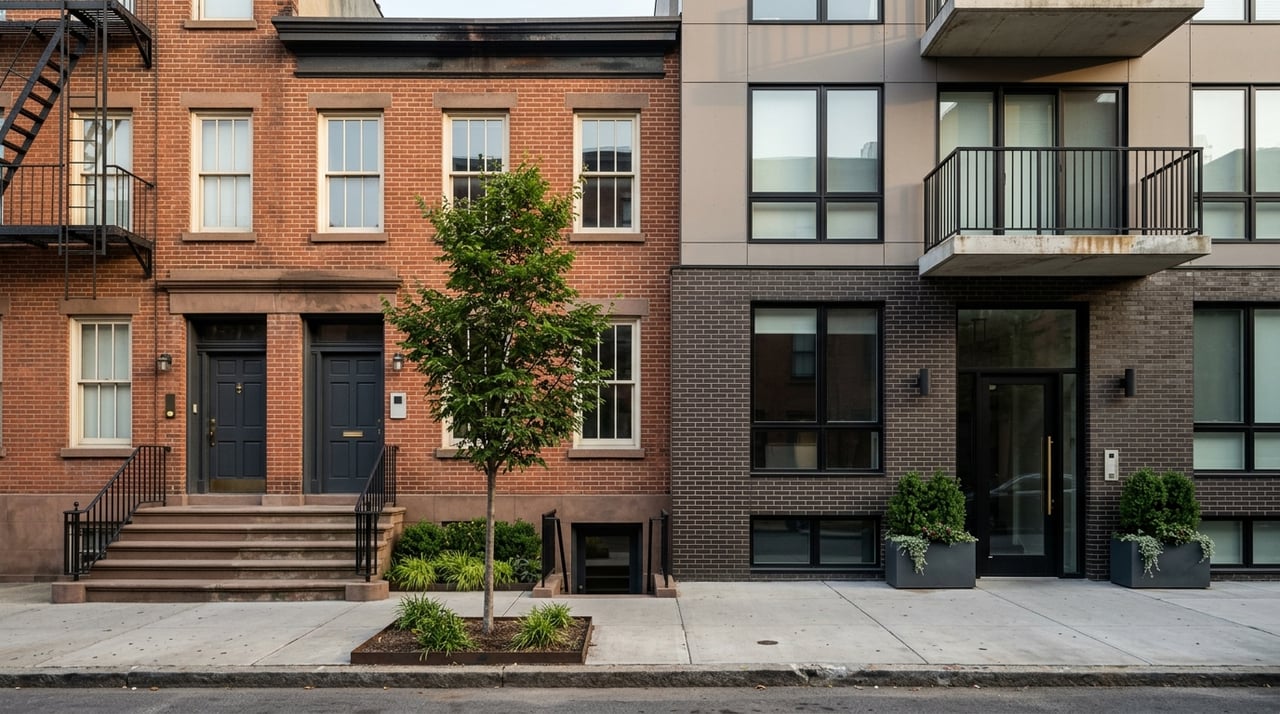
In this part of Manhattan, the term townhouse often overlaps with rowhouse. The Landmarks Preservation Commission describes a rowhouse as an attached house in an unbroken line that shares party walls with its neighbors, and notes that rowhouses are the dominant housing type in many historic districts. In practical terms, that means many West Village townhouse listings reflect a classic Manhattan rowhouse pattern rather than a single uniform architectural style.
What a townhouse often looks like
Classic New York townhouse design is usually narrow, vertical, and full of separation between floors. FDNY training materials describe many brownstones as three to five stories tall, about 20 to 25 feet wide, and roughly 60 feet deep. That scale gives you a very different living experience from an apartment on a single level.
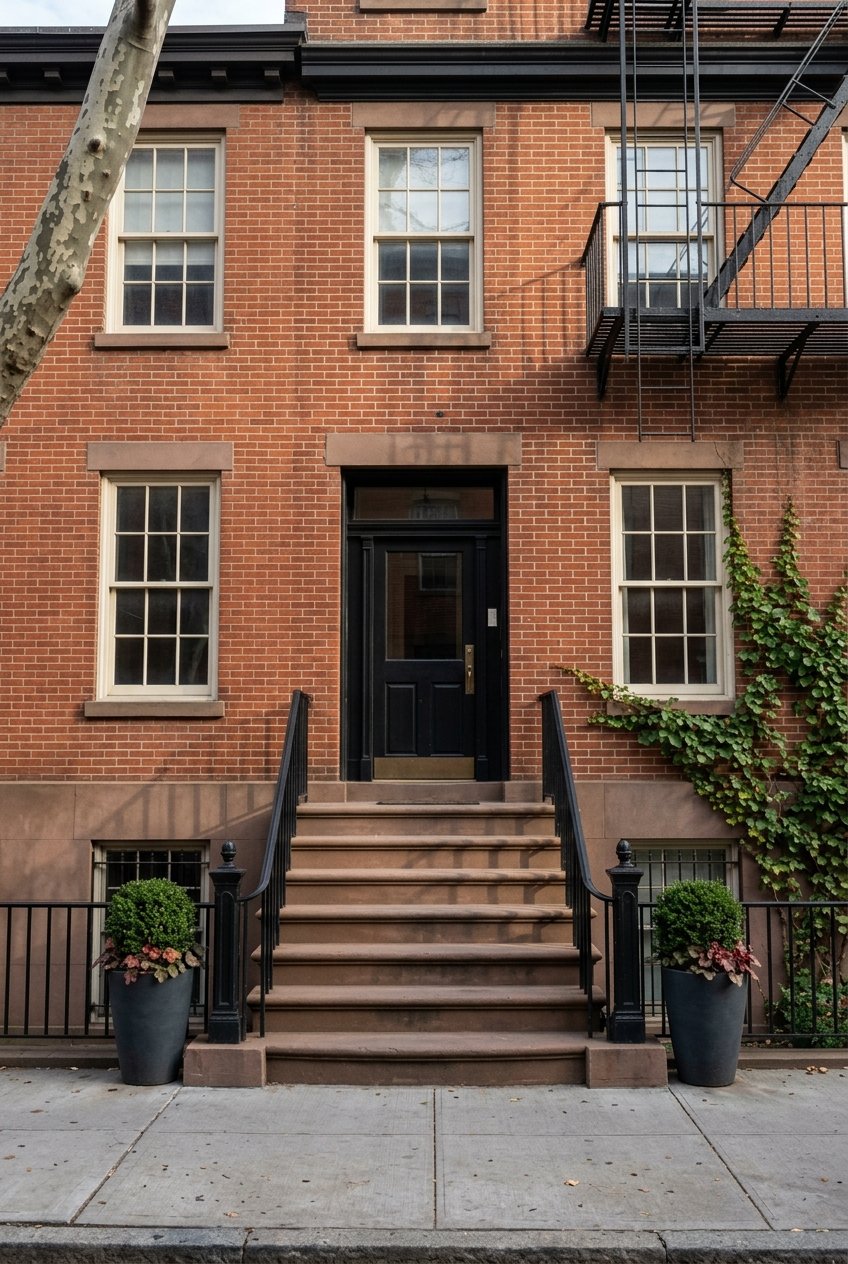
The traditional layout often starts with a stoop entrance. The parlor floor typically sits above street level, while kitchen, dining, and service spaces were historically placed below or behind the main formal rooms, with a cellar beneath. Even when interiors have been updated over time, that vertical rhythm often remains part of the home’s appeal.
Architecturally, West Village townhouses can include Federal and Greek Revival details. LPC records note features such as brick facades, brownstone stoops or bases, metal lintels and sills, and molded or bracketed cornices. Some homes also include dormers, rear extensions, or later alterations, so no two properties feel exactly the same.
The lifestyle appeal of townhouse living
One of the biggest draws is privacy. When you own a townhouse, you are not sharing hallways, elevators, or many of the day-to-day common spaces that come with apartment buildings. For buyers who want a more self-directed way of living, that can be a major advantage.
Outdoor space also matters. In the district record, rear yards, side yards, rear stables, and rear extensions all appear as part of the townhouse landscape. In a dense Manhattan setting, even modest private outdoor space can feel like a meaningful upgrade to your daily life.
You may also appreciate the sense of separation that a townhouse offers. Different floors can support different uses, whether that means entertaining on one level, quieter rooms above, or flexible lower-level space. That kind of layout can be especially appealing if you want more distinction between living, working, and hosting.
The preservation tradeoffs to know
The same historic character that makes the West Village so appealing can also make ownership more complex. In historic districts, most exterior changes to front and rear facades require LPC review. Even interior work may need LPC approval if it affects the exterior.
That review can make projects slower and more document-heavy than similar work in a non-landmarked setting. LPC also reviews additions in context, including rooftop additions, and evaluates proposals based on the architectural and historical character of the building and district. For buyers, this often affects plans involving windows, facade repairs, HVAC penetrations, rear additions, and rooftop work.
This does not mean improvements are impossible. It means you should go in with a realistic timeline and a clear understanding of approvals. If a property already has prior alterations, those details are worth reviewing carefully during due diligence.
Townhouse vs co-op or condo
For many West Village buyers, the real question is not just whether they want a townhouse. It is whether a townhouse fits them better than a nearby co-op or condo. The answer usually comes down to governance, autonomy, and maintenance responsibility.
In a co-op, you buy shares in a corporation and receive a long-term proprietary lease for a specific apartment. You also pay maintenance charges based on the shares allocated to that apartment, and the board of directors is elected by shareholders. In a condo, you receive title to the unit along with an interest in the common elements, and the condominium structure governs common charges, repairs, alterations, and the authority of the board of managers over shared property.
By contrast, townhouse living often feels more independent and less board-driven. You generally have greater control over your own property decisions than you would in a co-op, but you also take on more direct responsibility for upkeep. You should also expect fewer building-spread services than you may find in a full-service condo or co-op.
Here is a simple comparison:
| Feature | West Village Townhouse | Co-op or Condo |
|---|---|---|
| Decision-making | More owner-directed | More shared governance |
| Maintenance | More direct owner responsibility | More building-managed shared responsibilities |
| Privacy | Higher | Varies by building |
| Services | Typically fewer shared services | Often more shared services |
| Alteration process | Owner-led, often with LPC review if landmarked | Building rules plus possible board review |
What to check before you buy
A townhouse search in the West Village should start with a few practical questions. First, is the property a single-family house, a converted multi-family building, or a mixed-use structure? That distinction can affect how the home functions today and how you may be able to use it in the future.
Second, is the property inside an LPC historic district? In the West Village, that question is central, not secondary. Landmark status can shape everything from window replacement to facade work to expansion plans.
Third, what systems or alterations have already been completed? The New York Attorney General’s buyer guidance stresses that facade, roof, flooring, windows, plumbing, heating, and electrical systems deserve close review because the physical condition of a property can materially affect the purchase.
That review matters even more in older Manhattan housing stock. Existing buildings can have defects even when they are well maintained, so careful inspection is essential. If a house was converted after the Civil War into multiple dwellings, as some in the area were, the interior plan may differ significantly from the original rowhouse layout.
Smart due diligence for West Village buyers
Townhouse due diligence should be detailed and organized. You are not just evaluating finishes and charm. You are also evaluating the condition of a complex structure, the history of alterations, and any approval issues that may affect future plans.
As you review a property, focus on:
- Whether it is single-family, multi-family, or mixed-use
- Whether it is within a historic district
- The condition of the roof and facade
- The age and state of plumbing, heating, and electrical systems
- Window condition and any prior replacements
- Rear extensions, rooftop work, or other visible alterations
- How the current layout compares with original rowhouse form
If you are comparing a townhouse with a co-op or condo, your priorities should guide the decision. If you want more privacy and control, a townhouse may feel like the better fit. If you prefer shared services, a more structured governance model, and fewer direct repair responsibilities, a nearby co-op or condo may make daily life easier.
Who townhouse living suits best
Townhouse living tends to work best when you value autonomy and understand the responsibilities that come with it. You may be a strong fit if you want a more independent home experience and are comfortable managing repairs, approvals, and long-term maintenance planning.
It can also appeal to buyers who want a classic West Village property with architectural detail and vertical living space that is hard to replicate in apartment inventory. At the same time, it is not always the simplest ownership path. For some buyers, especially those who want more predictable building support, a co-op or condo remains the better match.
The key is not to treat a townhouse as automatically better. It is better only if it matches how you want to live, what level of responsibility you want to carry, and how much flexibility you need in the space.
If you are weighing townhouse living against a co-op or condo in the West Village, a thoughtful, property-specific review can save you time and help you avoid expensive surprises. For tailored guidance on Manhattan townhouse, co-op, and condo opportunities, connect with Cody Parker Hellberg-.
FAQs
What does townhouse living in the West Village usually mean?
- In the West Village, townhouse living often refers to attached rowhouse-style homes that share party walls and follow classic Manhattan vertical layouts, rather than one single facade or style.
How are West Village townhouses different from brownstones?
- The term townhouse is often used broadly in the neighborhood, while West Village homes may include several rowhouse types with details such as brick facades, stoops, metal lintels, and cornices, not just literal brownstone fronts.
Are many West Village townhouses in historic districts?
- Yes. Much of the area is shaped by the Greenwich Village Historic District and its extension, which means exterior work and some exterior-affecting interior work may require LPC review.
What should buyers inspect in a West Village townhouse?
- Buyers should closely review the facade, roof, windows, flooring, plumbing, heating, and electrical systems, along with any prior alterations and the current building configuration.
Is a West Village townhouse better than a co-op or condo?
- It depends on your priorities. A townhouse often offers more privacy and owner control, while co-ops and condos may offer more shared services and less direct maintenance responsibility.